RHIZA – Making digital farming work for you
DECEMBER, 2025
Blog
Higher nitrogen prices are increasing the cost of applying fertiliser where the crop is unlikely to generate an economic response.
With the UK Carbon Border Adjustment Mechanism (CBAM) approaching, and the European scheme already affecting the fertiliser market, the value of targeting nitrogen more closely is coming under greater scrutiny.
For RHIZA Product Manager Ben Foster, variable rate nitrogen offers growers a practical way to use field data to match applications more closely to crop potential.
“Variable rate nitrogen has been available for a long time. Some farmers have tried it and decided it wasn’t for them, while others have the machinery capable of applying variable rate but have never tried it.
“There are now new tools available to farmers that make variable rate nitrogen cheaper, easier and more accurate.”
Using field data to target nitrogen applications
Yield maps are a useful starting point for understanding whether crop performance varies consistently across a field.
As more combines capable of producing yield maps have become available, an increasing number of farms now have several years of data that can be used to investigate these patterns.
Ben recommends comparing historic yield information with satellite imagery to understand where variation seen during the growing season is reflected at harvest.
“I’d recommend looking at the variation in satellite imagery from a platform like Contour in March or April and overlaying it with historical yield maps.
“In my experience, the variation in spring satellite images will likely correlate very closely with yield data from the summer. This should give farmers the confidence to tweak late spring nitrogen applications to match field potential.”
Satellite imagery does not explain the cause of variation by itself, but combining it with yield history, soil information and field knowledge can help identify where different nitrogen strategies may be appropriate.
Matching nitrogen to field potential
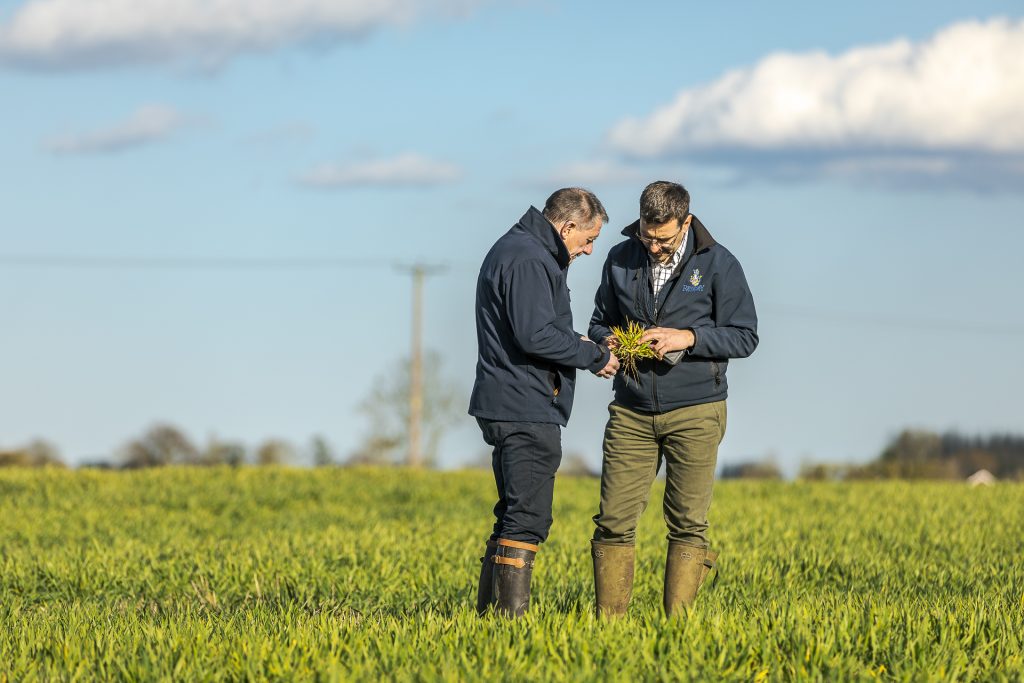
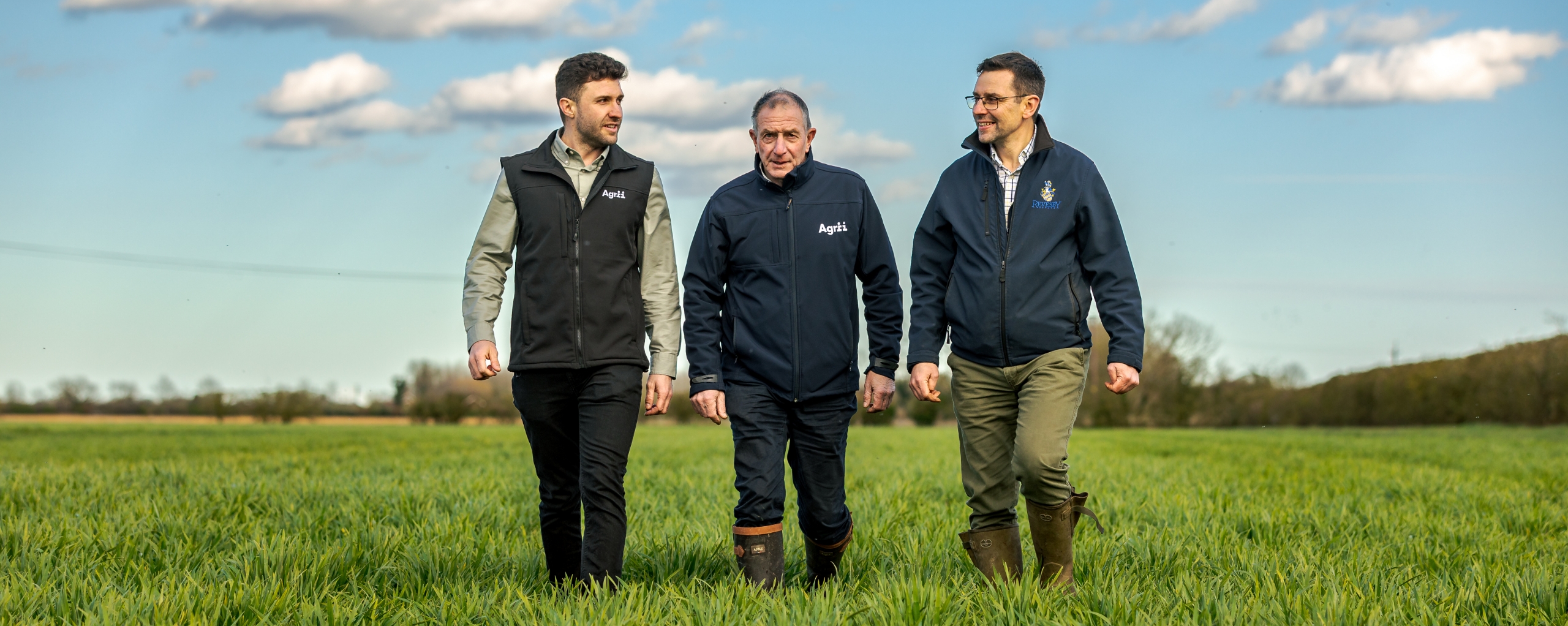
Peter Cartwright, Farms Manager at Revesby Estate in Lincolnshire, moved back to variable rate nitrogen on wheat after seeing the approach tested through Agrii’s Digital Technology Farm trials.
The estate had previously used variable rate nitrogen but stopped because there was insufficient confidence around how rates should be adjusted within wheat crops.
“In oilseed rape, it’s straightforward because it’s linked to the green area index,” says Peter.
“With wheat, we didn’t know whether to push a backwards crop or hold back on it. We are still asking similar questions, but we have a better grasp of it with the information available to us.”
The estate has since adopted variable rate nitrogen across its wheat area and is using the approach alongside relevant environmental actions.
Using nitrogen more appropriately rather than simply using less
Variable rate application does not necessarily mean reducing the total amount of nitrogen used across the farm.
At Revesby, overall nitrogen use was not reduced during the first season. Instead, applications were distributed differently, with more nitrogen directed towards areas showing stronger potential and less applied where the likely response was lower.
Peter says the economics of nitrogen have made this increasingly important.
“The economic viability of that last 10% of yield has changed.”
Where fertiliser prices rise relative to grain values, the financial penalty for applying nitrogen that does not generate sufficient additional yield becomes greater.
This makes understanding field potential, rather than applying a uniform rate across every hectare, increasingly relevant.
Optimum yield or canopy levelling?
Contour gives growers different approaches when building variable rate nitrogen plans.
An optimum yield strategy favours areas with stronger crop potential, directing more nitrogen towards them where there is evidence that additional input can be used effectively.
A canopy levelling approach works differently, increasing rates in areas with lower vegetative indices in an attempt to reduce variation across the crop.
Ben says there is no single correct strategy for every field.
“There is no definitive answer to this. It is dependent on the season and the farmer’s knowledge of the field.”
The appropriate approach will depend on the crop, soil, season and the reason for the variation being observed.
Soil type can change the nitrogen response
Crop biomass is only one part of the decision.
Differences in soil texture and underlying geology can influence how different parts of a field perform, particularly during dry springs.
At Revesby, Digital Technology Farm trials have been exploring how these differences should influence nitrogen applications.
During a dry season, the trials showed promising results from withholding nitrogen from sandier areas where available moisture was limiting crop potential.
Conversely, areas with greater water-holding capacity may retain more yield potential during dry conditions and justify a different nitrogen strategy.
Understanding the cause of field variation is therefore important before rates are changed.
Testing variable rate nitrogen without committing every hectare
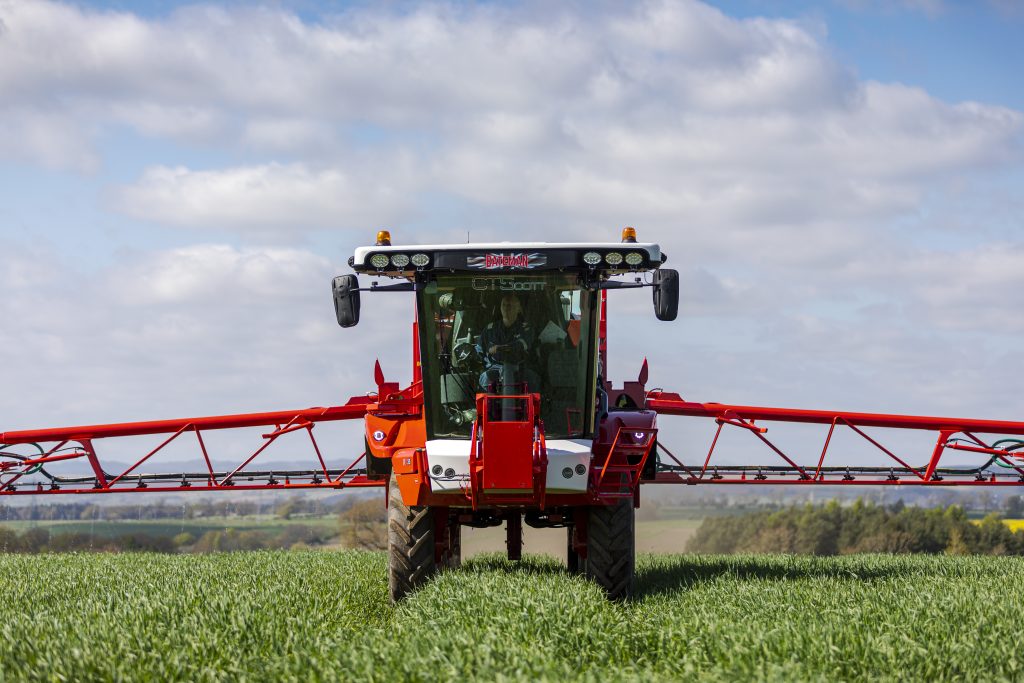
Growers with compatible spreading equipment do not necessarily need to move their entire nitrogen programme to variable rate application immediately.
Ben suggests starting with selected fields or a trial area where there is clear variation and sufficient historic data to assess the result.
“I’d encourage all farmers with the capability of variable rate spreading to look at the technology this season, at least in a trial area, to examine its results on their bottom line.”
Contour uses a pay-as-you-go approach to variable rate planning. The functionality can be made available across the farm, but growers are charged only for the hectares where a variable rate plan is produced.
“RHIZA recognises not every field will require variable rate nitrogen. Whilst the tool is accessible across the whole farm, you’ll only be charged for the hectares that the system produces a plan for,” Ben explains.
Turning field variation into a nitrogen decision
Variable rate nitrogen is most useful when it is based on an understanding of why crop performance varies across the field.
Historic yield maps, satellite imagery, soil information and local knowledge can be brought together within Contour to help identify where rates may need to change and which strategy is appropriate.
The objective is not simply to apply less nitrogen. It is to use the available information to place nitrogen where the crop is more likely to make effective and economically justified use of it.
Speak to the RHIZA team or your Agrii agronomist about using Contour to assess field variation and build variable rate nitrogen plans for your farm.